
There’s more to Obyte than just GBYTE.
Besides the native coin, Obyte supports many other digital units called tokens.
But what exactly is a token? And how does it work on Obyte?
Here’s your quick and easy introduction.
Table of contents
- What is a token?
- GBYTE vs. Token – What’s the difference?
- How do you create a token?
- Why create your own tokens?
- Tokens from other chains
- Conclusion
What is a token?
A token on Obyte is a digital unit that exists directly on the DAG.
Tokens can represent all kinds of things: a currency, a voucher, a voting right – or simply a symbol of belonging.
They are building blocks for custom use cases – from community projects to DAOs.
📌 You can explore all existing tokens on Obyte in the Asset Directory. Technically, tokens on Obyte are called “assets” – but we’ll stick with “token” for simplicity.
GBYTE vs. Token – What’s the difference?
- GBYTE is – as you may know – the native token of Obyte.
It’s used to pay for transactions and storage fees.
(More on that in the article: GBYTE – The Coin of Obyte) - Tokens, on the other hand, are custom digital units that can be created by individuals or organizations.
They can represent anything – from loyalty points to club memberships.
Examples of what a token can be:
- a reward token
- a privacy coin like Blackbytes
- a token that grants access (e.g. to a private group)
All tokens are treated equally on Obyte – they can be sent, used, and integrated just like GBYTE.
How do you create a token?
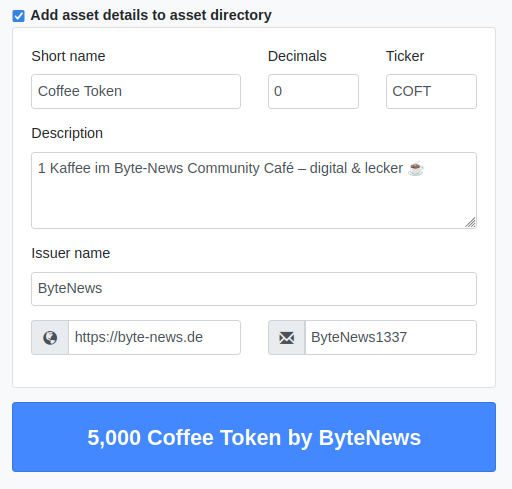
Anyone can create their own tokens on Obyte – either via the wallet or using special Autonomous Agents (AAs).
You define:
- the name and ticker
- the total supply and decimal places
- whether more tokens can be issued
- if they are freely transferable
- who is allowed to hold them (e.g. only verified users)
🛠 At https://asset.obyte.app you’ll find a simple tool to create your own token in just a few clicks.
Why create your own tokens?
Tokens can be used for many things, including:
- rewards and incentives
- loyalty points (like Payback or airline miles)
- access to exclusive content
- representing real-world value (e.g. shares, currencies, property)
From loyalty cards to real estate – anything that can be represented digitally can be tokenized.
Creating a token on Obyte is easy – and completely independent of any central authority.
💡 TIP: If you want to dive deeper into the topic, we recommend this documentary: 🎬 Token – Economic System Of The Future? – a worthwhile YouTube doc on the role of tokens in the digital economy.
Tokens from other chains
Besides custom tokens, Obyte also supports tokens from other networks, such as:
- ETH – Ethereum
- WBTC – Bitcoin (Wrapped)
- BNB – Binance Coin
- MATIC – Polygon
- USDC – Stablecoin
- KAVA – Kava ecosystem
This means:
You can use ETH, USDC and others directly on the DAG – to send, swap, use in DApps or interact with Autonomous Agents.
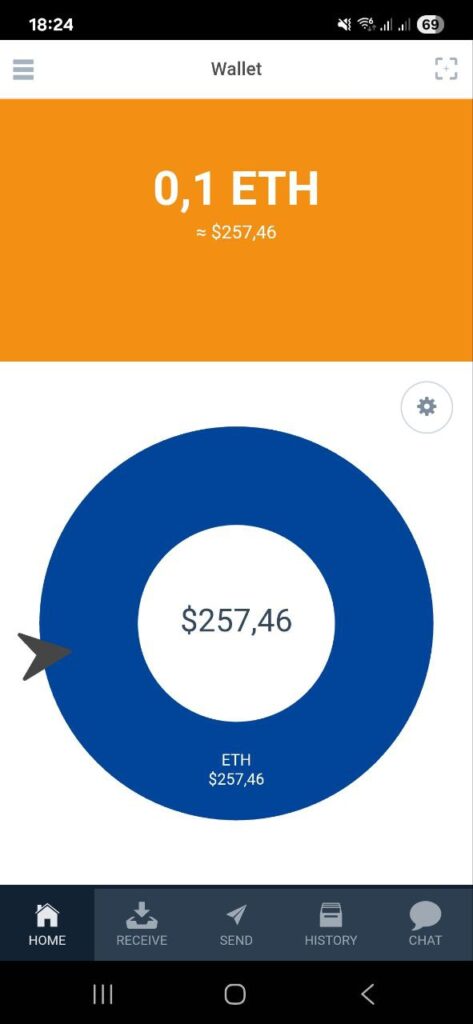
These tokens are brought into Obyte via the Counterstake-Bridge.
They are pegged 1:1 to their original counterpart – also known as “wrapped tokens”.
🔁 Counterstake is a decentralized bridge that lets you bring any token from EVM-compatible networks (like Ethereum, Polygon or BNB Chain) to Obyte.
Conclusion
Tokens on Obyte give you the freedom to create and manage digital value – easily, flexibly, and without technical barriers or central gatekeepers.
And the best part:
On Obyte, there’s no need for complicated smart contracts – everything runs on simple, clear rules directly on the DAG.
You can create your own token in just a few clicks – no coding required.
Go ahead and try it!