
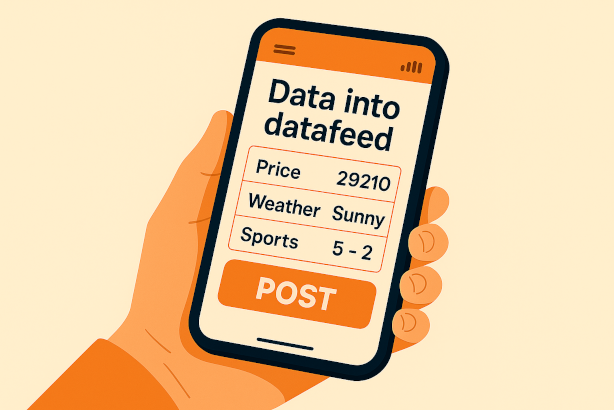
Decentralized networks like Bitcoin, Ethereum or Obyte are secure, transparent and independent – but there’s one thing they can’t do:
They don’t know what’s going on in the real world.
And that’s exactly where Oracles come in.
Table of Contents
- What is an Oracle?
- Why are Oracles so important?
- What types of Oracles are there?
- Oracles on Obyte
- Conclusion
What is an Oracle?
An oracle connects a decentralized network to the outside world.
It delivers real-world data – like prices, sports results or weather – so smart contracts and autonomous agents can respond to it.
💡Example:
Two people bet on a football match using a smart contract –
Borussia Dortmund vs Bayern Munich.The contract is supposed to automatically pay out the winnings to the winner.
But the network doesn’t know who won.
It needs an oracle to report the result.
Why are Oracles so important?
Oracles provide the data that make decentralized applications (dApps) possible.
- DeFi protocols use them to fetch real-time prices.
- Insurance contracts rely on event data – for example, in case of delays or cancellations.
- Betting platforms need verified sports results.
- Games & lotteries depend on fair random numbers.
- Governance systems can incorporate external decisions or vote outcomes.
In short:
Oracles bring real-world information into the network – and make it truly useful.
What types of Oracles are there?
Depending on the use case, oracles can take different forms:
- 🖥️ Software Oracles
Fetch data from online sources – like prices, weather or sports results. - 📡 Hardware Oracles
Provide data from physical sensors – for example in logistics or environmental monitoring. - 👤 Human Oracles
Enter data manually – for example in votes or dispute resolution. - 🎲 Randomness Oracles (VRF)
Generate verifiable random values – ideal for games, lotteries or fair draws.
Which type fits best depends on the use case – as long as the data is reliable and comes from outside the network.
Oracles on Obyte
Obyte also needs external information – for example price feeds, weather data or sports results.
But oracles on Obyte are not run by central authorities – anyone with a wallet can become an oracle 😎.
👉 Here’s how:
Open your wallet, go to “Send”, and select “Data into datafeed” at the top.
Then enter the values you want to post – and you’re done!
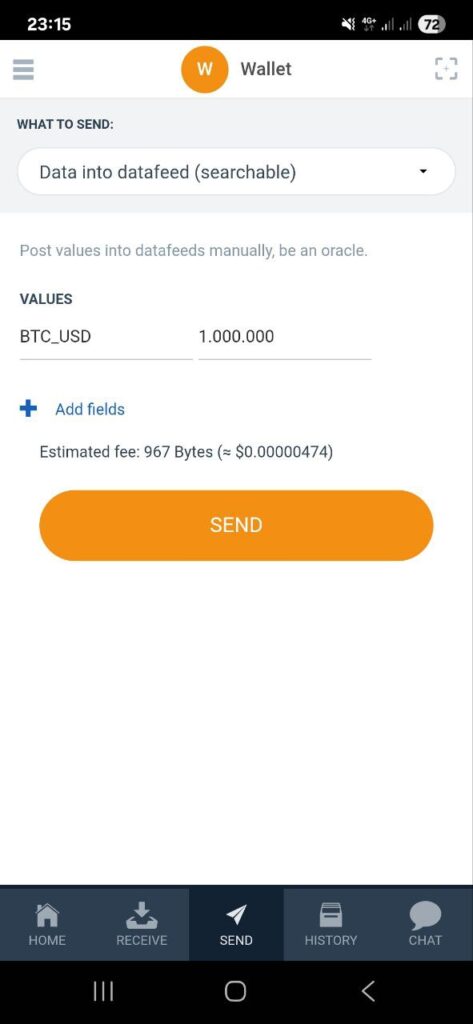
This turns your wallet into a bridge between reality and the DAG.
Because real applications need real data.
💡 Tip for advanced users:
If you want to post data regularly, you can use a headless wallet – ideal for automating the process.
Conclusion
Oracles turn a pure transaction network into a platform for real use cases.
On Obyte, anyone can become an oracle and post data directly into the network.
Simple, open and practically usable!